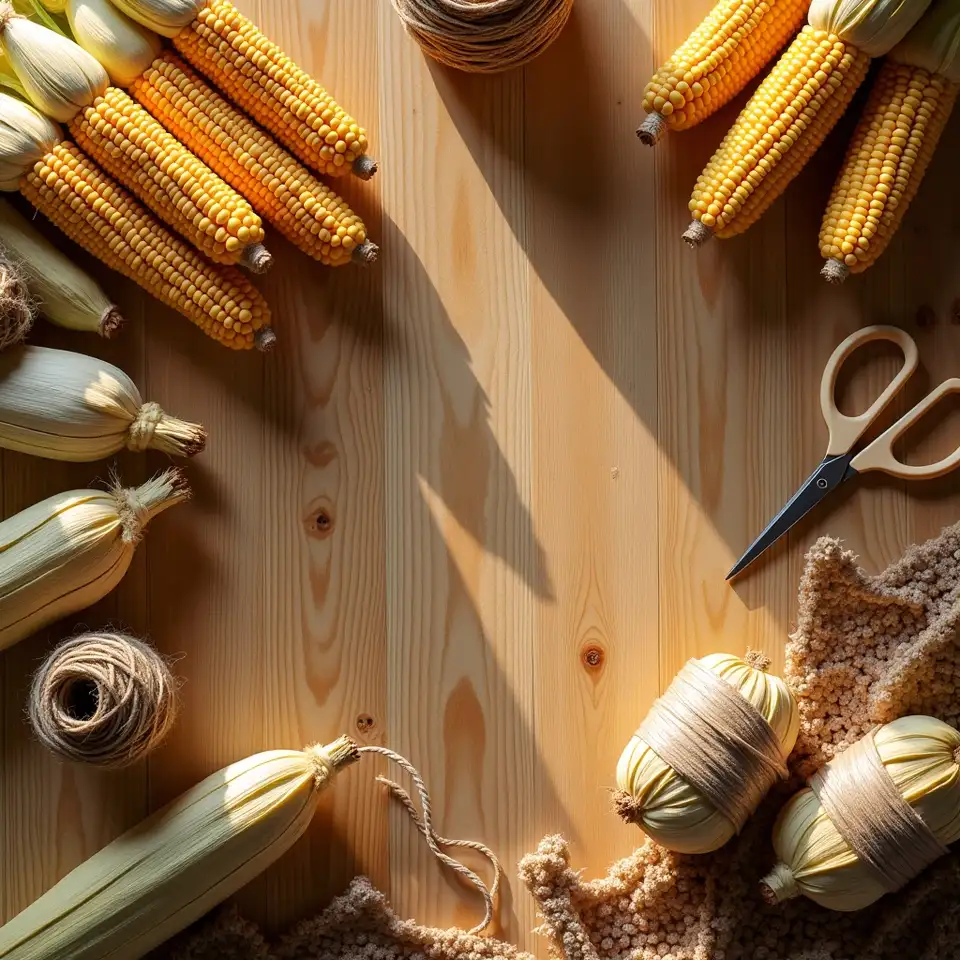
The right materials make the craft — here is what to gather first
Dried corn husks, natural twine, and a bowl of warm water are the foundations of a tradition
practised across centuries and continents. Everything else follows from those three things.
Natural, low-cost materials
Minimal preparation time
No specialist equipment
Australian sourcing options
Scales with skill level
What the craft actually needs
Before the first figure takes shape, a small collection of natural materials must be gathered, prepared, and understood. Each one plays a specific structural role in the finished doll.
Dried Corn Husks
The primary material — available dried from Latin American grocers, tamale suppliers, and farm stores across Australia.
Natural Twine or Thread
Cotton or jute twine holds binding knots at the neck, waist, and arms without slipping as husks dry and contract.
Wire Armature
Thin craft wire enables posed figures — extended arms, angled torsos — that hold their shape through the drying process.
Sourcing Your Husks
Corn husks reach Australian makers through several reliable channels — each with
practical advantages depending on location, budget, and how frequently the craft is
practised.
Buying dried husks from grocers
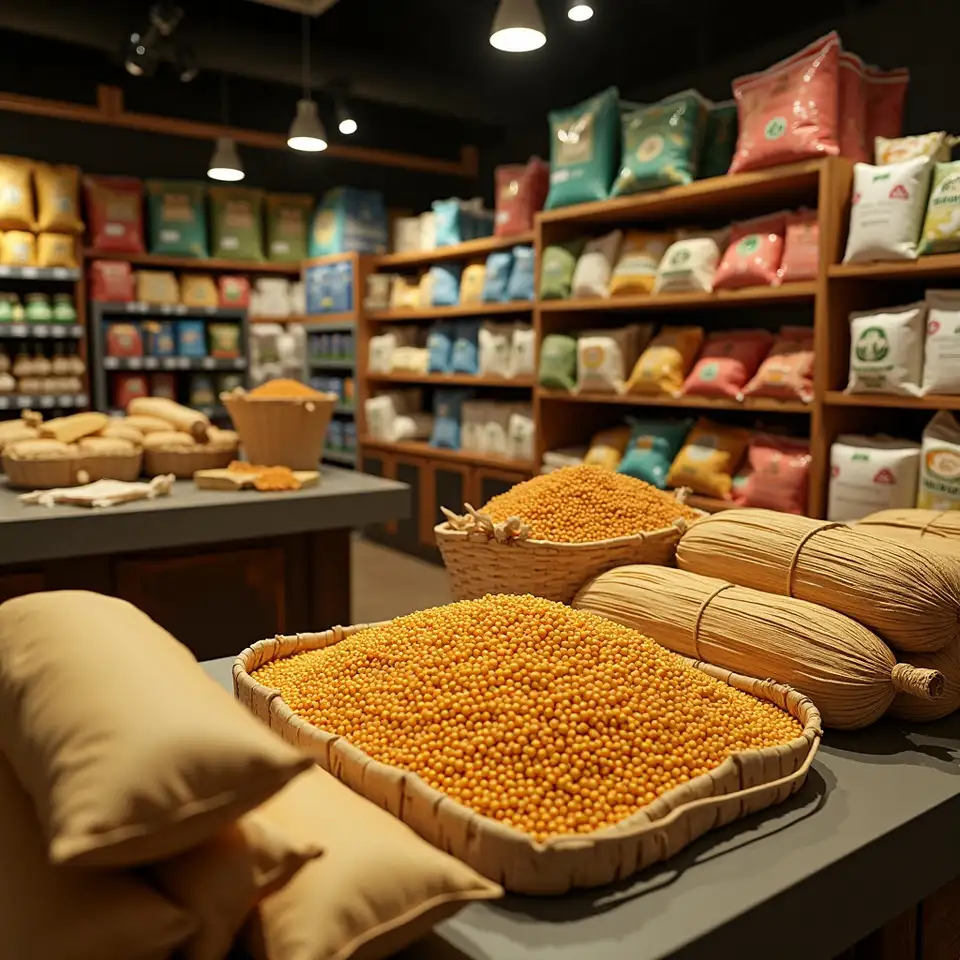
Latin American grocery stores across Australian capital cities stock dried corn husks year-round, sold in bags intended for tamale preparation. These husks are food-grade, consistently dried, and available in generous quantities at modest cost. The same product is stocked by some online specialty food retailers who ship nationally. When purchasing, look for husks that are pale gold to cream in colour, free of dark spots or mould, and uniform enough in width to produce consistent binding results. Tamale husks tend toward the smaller end of the size range — adequate for most beginner figures, though larger dolls may require supplementing with home-dried husks.
Drying your own from fresh corn
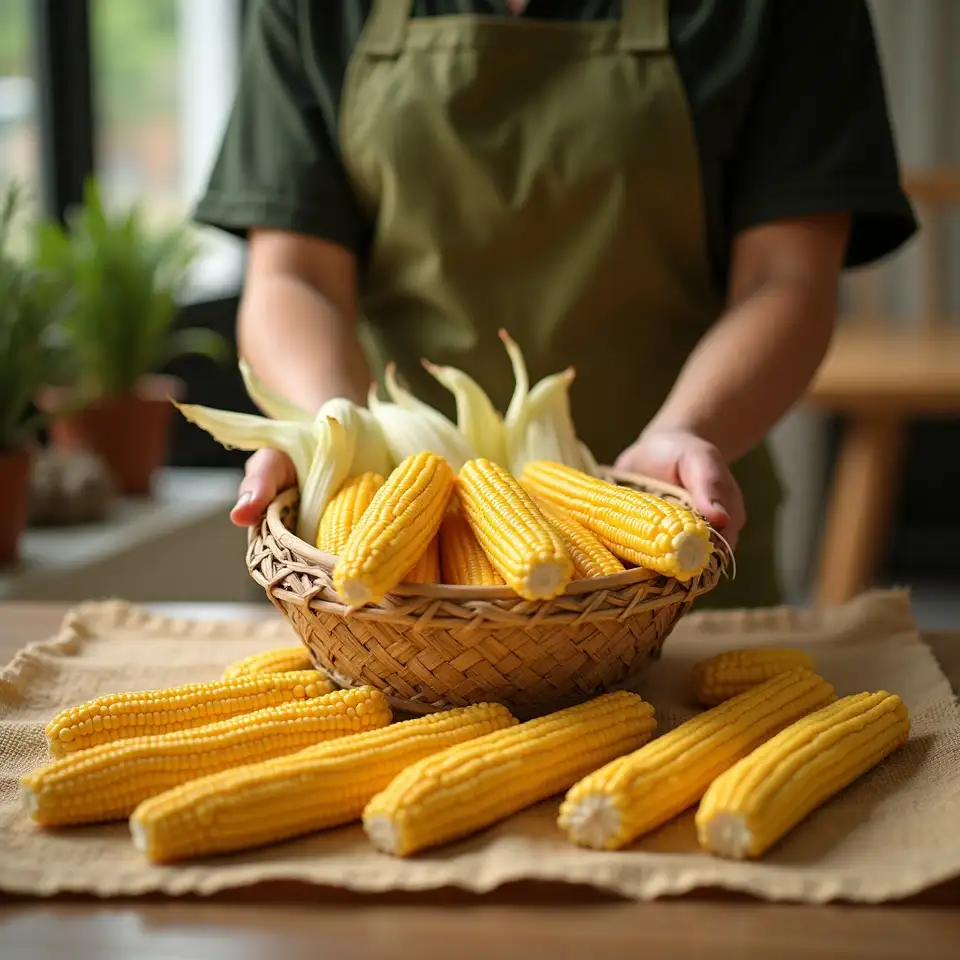
Fresh sweet corn husks, stripped carefully from the cob, can be dried at home with minimal effort. Spread the husks flat on a clean, ventilated surface — a wire rack, a sheet of newspaper in a dry room, or a shaded outdoor table in warm weather — and allow them to dry over three to five days until fully pale and rigid. Australian summers produce sweet corn abundantly and inexpensively, making this a practical seasonal option for makers who want larger quantities or wider husks than commercial sources typically provide. Store fully dried husks in a sealed paper bag or cardboard box in a cool, dry location — plastic traps residual moisture and encourages mould.
Farm suppliers and bulk sources
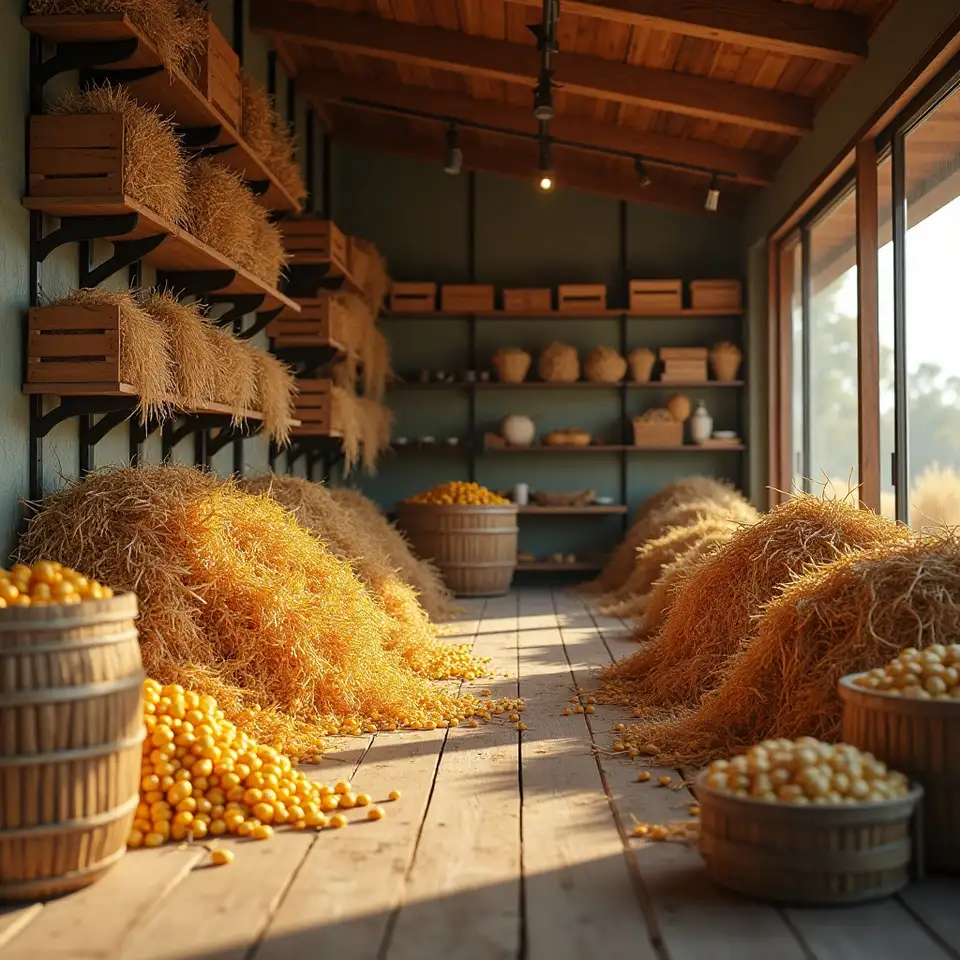
Agricultural suppliers in rural and regional areas of Australia occasionally stock dried field corn husks in quantities well beyond what a grocery bag provides. These husks tend to be larger and thicker than tamale husks, making them well suited to bigger figures, dressed dolls, and projects that require substantial structural material. Contact local farm supply stores or maize growers directly — many are willing to set aside husks from a harvest that would otherwise be composted. The husks require thorough drying before use if sourced fresh, but the size and quality available through agricultural channels is often superior to any retail alternative.
Material Selection
Choosing the right husk type for each doll style
Fresh, dried, thin, thick, natural, and dyed husks each produce different results in a finished figure. Matching the husk type to the intended doll style saves considerable frustration and wasted material across a making session.
| Characteristic |
Thin Dried Husks
$ 19.00
per project
Tamale-style husks, pale gold, narrow width, consistent texture
|
Thick Field Husks
$ 49.00
per project
Agricultural husks, wider, sturdier, better for large-scale figures
|
Home-Dried Fresh Husks
$ 29.00
per project
Dried from sweet corn, variable width, excellent flexibility when soaked |
|---|---|---|---|
| Beginner figures | Suitable | Suitable | Suitable |
| Large dressed dolls | Not suitable | Suitable | Suitable |
| Natural dyeing | Suitable | Not suitable | Suitable |
| Consistent sizing | Suitable | Not suitable | Not suitable |
| Armature figures | Not suitable | Suitable | Suitable |
| Seasonal availability | Year-round | Harvest season | Summer only |
| Fine detail work | Suitable | Not suitable | Suitable |
| Mould resistance | Suitable | Suitable | Not suitable |
| Cost per session | Very low | Low to free | Near zero |
Pro tips on material preparation and natural dyeing
1
Soak husks in warm water for ten to fifteen minutes — no more
Warm water softens dried husks to a workable pliability within ten to fifteen minutes for most thicknesses. Soaking beyond that threshold saturates the fibres, reducing their structural resilience and causing tearing under binding tension. Test a single strip first — the correct texture is supple and foldable without any sense of fragility or sogginess. Thinner tamale husks reach the right point faster than thick field husks, so adjust timing accordingly rather than applying a single rule to all material types.
2
Prevent mould during drying by ensuring full airflow around the figure
Mould develops when residual moisture in the husks cannot escape during the drying
phase. Standing the finished figure upright or hanging it in a position that allows air
to circulate around all surfaces — including the interior of any skirt or bundled lower
section — is the most reliable prevention. Australian coastal humidity extends drying
time and increases mould risk compared to dry inland climates. A small desk fan set to
low speed and directed past — not directly at — the figure accelerates drying without
causing the uneven shrinkage that results from direct heat application.
3
Choose twine weight based on the binding point, not personal preference
Heavier jute twine holds the waist and lower body bindings effectively but is too thick for the neck and arm bindings on smaller figures, where it can distort proportions or prevent the husks from lying flat. Fine cotton thread or thin natural twine produces cleaner results at narrow binding points. A practical approach used across several documented folk traditions is to keep two weights of binding material on hand and select based on the structural requirement of each individual binding rather than standardising across the whole figure.
4
Use food-safe plant materials for natural dyeing to keep the process safe
Natural dyes applied to dried husks before or after shaping can produce a range of warm earth tones using kitchen ingredients that are both food-safe and widely available in Australia. Onion skins produce deep amber and gold tones. Black tea produces soft brown. Turmeric produces strong yellow that fades slightly on drying. Simmer husks in the dye bath for twenty to thirty minutes, then remove, drain, and allow to dry fully before use in a figure. Dyed husks are more brittle than undyed ones after drying — soak briefly before shaping to restore workable flexibility.
5
Store unused dried husks in paper, never plastic, to prevent moisture buildup
Dried corn husks stored in sealed plastic bags or airtight containers trap any residual atmospheric moisture, creating conditions that support mould growth over weeks or months. Paper bags, cardboard boxes, or open-weave baskets allow the husks to breathe while protecting them from dust and direct humidity. Store in a cool, dry location away from direct sunlight, which causes the husks to become overly brittle and prone to cracking during soaking. Properly stored dried husks remain in usable condition for extended periods — several documented folk art traditions describe husks kept across multiple harvest seasons without significant deterioration.
6
Condition wire armature ends before inserting into a figure
Raw wire ends cut with pliers are sharp enough to puncture husks from the inside during
shaping, creating visible surface damage that is difficult to conceal in a finished
figure. Bending each wire end into a small closed loop before insertion distributes
pressure across a wider surface area and prevents puncturing. This technique appears
consistently in intermediate tutorial material across several folk art instruction
traditions and takes less than a minute per armature to execute. The difference in
finished surface quality is considerable, particularly on figures with posed arm
positions where wire movement during shaping is most pronounced.
Craft Vocabulary
Key terms in corn husk doll making
A reference for the specific vocabulary that appears across tutorials, material guides, and community discussions — useful for beginners encountering craft terminology for the first time and for experienced makers wanting precise definitions.
Preparation
Husking
The process of stripping dried or fresh corn husks from the cob and sorting them by width, thickness, and condition for use in doll making. Husking precedes soaking and is the first material handling step in any corn husk doll project. Quality husking — removing damaged, discoloured, or inconsistently sized strips — directly affects the evenness of the finished figure's surface texture and the reliability of binding knots throughout construction.
Preparation
Soaking
The controlled immersion of dried corn husks in warm water to restore flexibility prior to shaping. Soaking time varies by husk thickness but falls within a ten-to-fifteen-minute range for most commercially available dried husks. Under-soaking leaves husks brittle and prone to cracking at fold points. Over-soaking saturates the fibres, reducing structural integrity and causing tearing under binding tension during construction.
Structure
Wire Armature
An internal wire framework inserted into a corn husk doll figure to support posed positions — extended arms, angled torsos, or seated forms — that the husks alone cannot maintain through the drying process. Thin craft wire, bent to match the intended pose and conditioned at the ends to prevent puncturing the husks, is inserted before the outer husk layers are applied and bound. Armatures are standard practice in intermediate and advanced figure construction.
Technique
Binding
The technique of wrapping natural twine or cotton thread tightly around a bundle of husks at a structural point — neck, waist, or arm joint — to define the figure's proportions and hold the shape through drying. Binding tension determines how clearly each structural point is defined in the finished figure. Loose bindings allow husks to shift during drying, producing a figure that loses its intended form as moisture leaves the material.
Materials
Raffia
A natural plant fibre, derived from the raffia palm, occasionally used in corn husk doll making as an alternative binding material or decorative element. Raffia is finer and more pliable than jute twine, making it well suited to detail binding on smaller figures and to decorative wrapping on dressed dolls. It accepts natural dyes readily and is available from craft suppliers across Australia. In some regional traditions, raffia is used to construct hair and clothing details on finished figures.
Finishing
Patina
The natural colour change and surface texture that develops on a corn husk doll over time as the husks age, oxidise, and respond to ambient light and humidity. A well-made figure develops a warm, deepening patina over months and years that is considered a mark of quality in folk art collecting. Artificially accelerating patina through chemical treatment is possible but rarely practised within hobbyist folk art communities, where natural ageing is preferred as evidence of the figure's authenticity and material honesty.
Technique
Bundling
The gathering of multiple husk strips into a unified mass before folding or binding — the foundational act from which every corn husk doll figure begins. Bundle density determines the figure's overall weight and structural solidity. A bundle that is too sparse produces a figure that collapses inward as the husks dry; one that is too dense resists folding at the neck and produces a head with a rigid, unconvincing shape. Experienced makers develop a feel for the correct bundle density through repetition rather than measurement.
Finishing
Lacquering
The application of a clear protective coat — traditionally a diluted natural resin, in contemporary practice often a water-based craft sealant — to a finished and fully dried corn husk doll figure. Lacquering reduces the figure's sensitivity to humidity changes, stabilises the surface colour, and extends the durability of any applied natural dyes or decorative elements. Not all folk art traditions include lacquering as a finishing step — some regard the uncoated surface as more authentic to the material's natural character.
Finishing
Natural Dyeing
The process of colouring corn husks using plant-based or mineral-based dye sources prior to or following figure construction. Common dye sources used within the corn husk doll making community include onion skins for amber tones, black tea for brown, and turmeric for yellow. Husks are simmered in a dye bath, drained, and fully dried before use. Dyed husks are more brittle than undyed ones and require brief re-soaking before shaping to restore workable flexibility without washing out the applied colour.
Context
Folk Art Figure
A handmade object produced within a vernacular craft tradition — outside formal art institutions, using locally available materials, and transmitted through direct demonstration rather than written instruction. The corn husk doll is among the most widely documented folk art figures in the ethnographic record, appearing independently across Indigenous American, Eastern European, and West African craft lineages. The term distinguishes the object from fine art sculpture while acknowledging its significant cultural and historical weight within the communities that produced it.